Artificial Intelligence (AI) is revolutionizing marketing, and small businesses that adapt to these changes can gain a significant competitive edge. While large corporations have the resources to invest heavily in AI-powered marketing tools, small businesses can still leverage AI effectively without massive budgets. Here’s how you can integrate AI into your marketing strategy to enhance efficiency, personalise customer experiences, and drive growth.
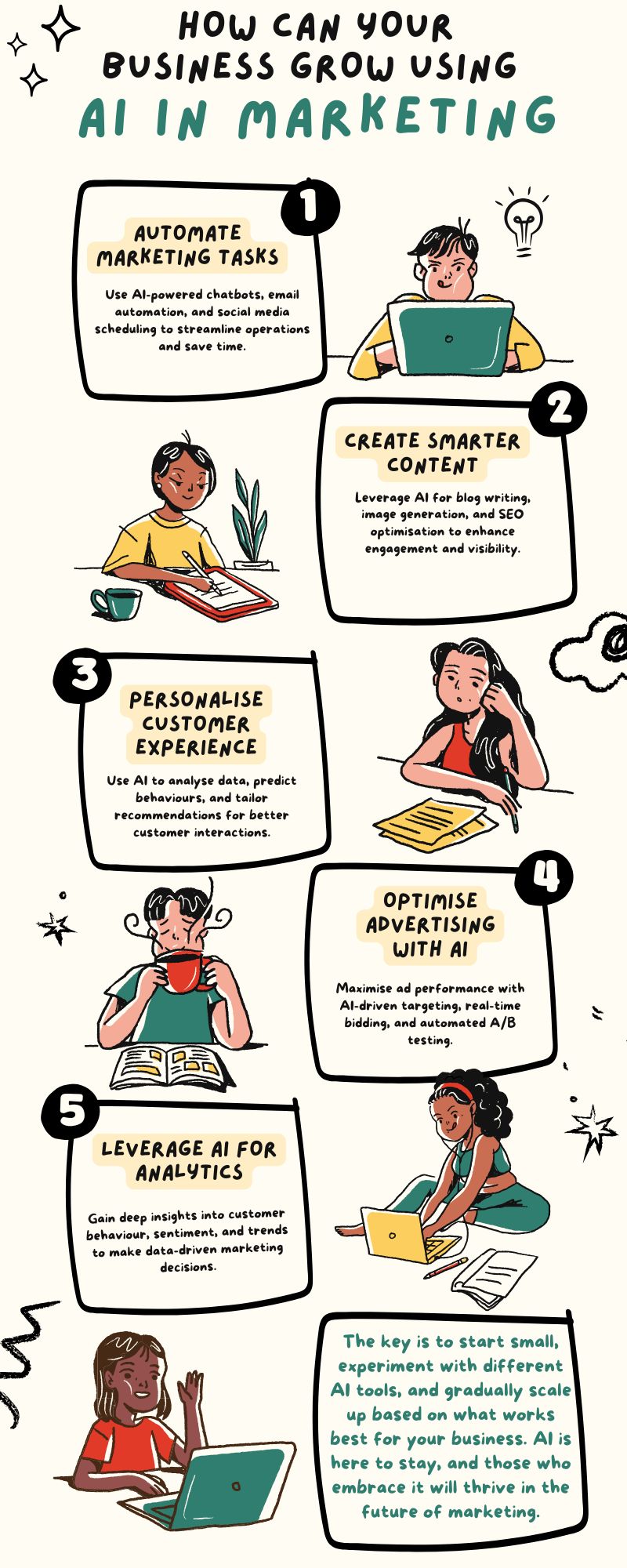
1. Embrace AI-Powered Automation
One of the biggest benefits of AI is automation. Small businesses can use AI to handle repetitive marketing tasks, saving time and improving efficiency.
Chatbots for Customer Support – AI-powered chatbots (like Drift, Tidio, or ChatGPT-based bots) can handle common customer inquiries 24/7, providing instant responses and improving customer satisfaction.
Email Marketing Automation – AI-driven email marketing platforms (like Mailchimp, HubSpot, or ActiveCampaign) can personalise email campaigns, predict customer behaviour, and optimise send times for higher engagement.
Social Media Scheduling – Tools like Buffer, Hootsuite, and Sprout Social use AI to determine the best times to post and suggest content that resonates with your audience.
2. Leverage AI for Content Creation
Creating content consistently can be challenging for small businesses, but AI can help streamline the process.
AI Writing Assistants – Tools like ChatGPT, Jasper, and Copy.ai can generate blog posts, product descriptions, and social media captions based on your prompts.
Video and Image Generation – AI-powered platforms like Canva, Runway ML, and Synthesia can create engaging visuals and videos with minimal effort.
SEO Optimisation – AI tools like Clearscope, Surfer SEO, and SEMrush analyse search trends and suggest the best keywords to improve your content’s visibility.
By integrating AI into your content strategy, you can produce high-quality, engaging content without spending excessive time or money.
3. Use AI for Personalisation and Customer Insights
AI can analyse vast amounts of data to deliver personalised experiences that drive customer engagement and sales.
AI-Powered Recommendation Engines – Platforms like Shopify and WooCommerce use AI to suggest products based on browsing and purchase history, boosting sales.
Predictive Analytics – AI tools like Google Analytics 4 and HubSpot analyse customer behaviour and predict future trends, helping you tailor your marketing efforts.
Dynamic Pricing Strategies – AI-driven pricing tools adjust product prices in real time based on demand, competition, and customer preferences.
By leveraging AI-driven insights, you can create marketing campaigns that resonate more deeply with your audience.
4. Optimise Paid Advertising with AI
Running ads effectively can be costly, but AI can maximize your return on investment (ROI) by optimizing your ad campaigns.
AI-Powered Ad Targeting – Platforms like Facebook Ads, Google Ads, and TikTok Ads use AI to automatically target the right audience based on their interests and behaviours.
Automated Bidding Strategies – AI algorithms adjust ad spending in real time, ensuring you get the best possible ROI.
AI-Generated Ad Creatives – Tools like Adzooma and Pencil AI create ad variations and test which ones perform best.
Using AI for advertising helps small businesses compete with larger brands by making ad spend more efficient.
5. Improve Customer Experience with AI-Driven Analytics
AI-powered analytics can provide deeper insights into customer behaviour and preferences, helping you refine your marketing strategies.
Sentiment Analysis – Tools like Brandwatch and Sprinklr analyse social media comments and reviews to gauge customer sentiment and identify areas for improvement.
AI-Driven Surveys – Platforms like Typeform and Qualtrics use AI to craft surveys that gather more accurate customer feedback.
Voice and Visual Search Optimisation – AI-driven search engines (like Google Lens and Alexa) are changing how people find products. Small businesses should optimise their websites for voice and image search.
By understanding customer needs through AI, you can tailor your marketing strategies to enhance engagement and retention.
Conclusion
AI is no longer a luxury reserved for large corporations; small businesses can also harness its power to optimise marketing, personalise customer experiences, and drive growth. By integrating AI-powered tools into automation, content creation, customer insights, advertising, and analytics, small businesses can stay competitive in the ever-evolving digital landscape.
The key is to start small, experiment with different AI tools, and gradually scale up based on what works best for your business. AI is here to stay, and those who embrace it will thrive in the future of marketing.
 LAB Marketing